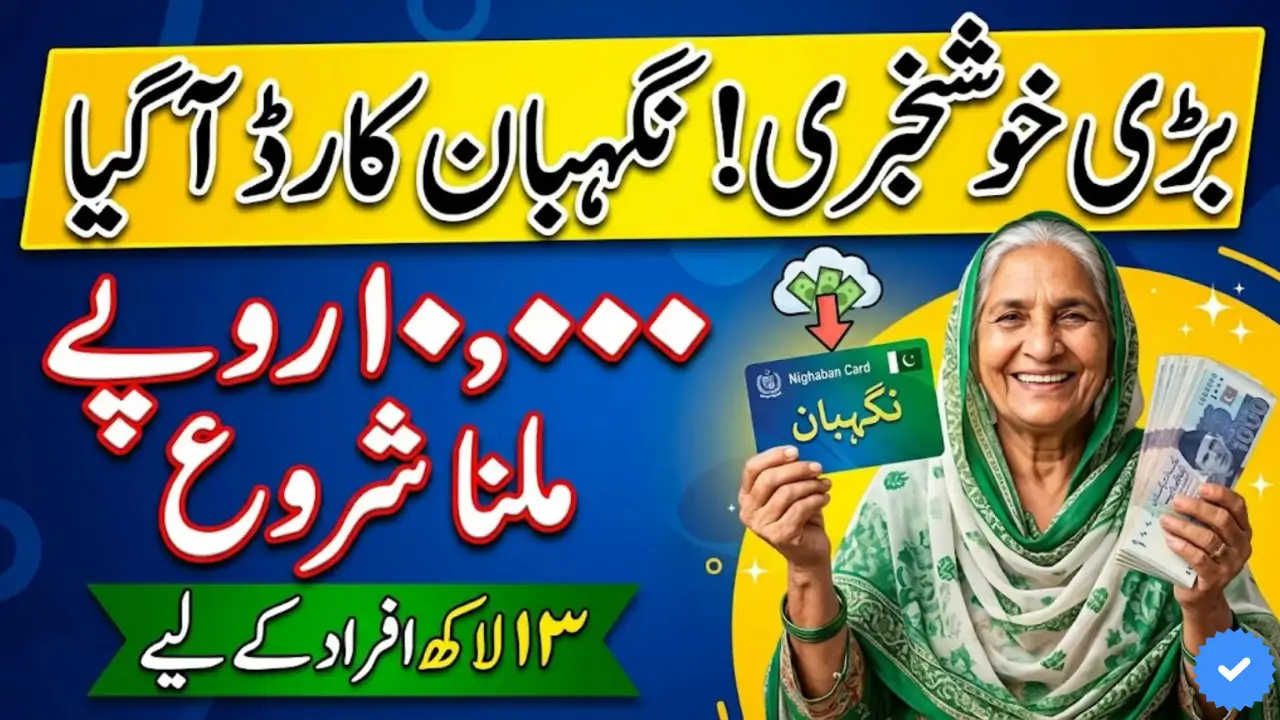
Nigehban Card Distribution Start – 1.3 Million Families to Receive Rs. 10,000 Assistance
The Nigehban Card Distribution Start has created hope for many low-income families who are struggling to manage daily expenses. Rising prices of essential items have made it difficult for households to maintain financial stability, and government support programs can play an important role in reducing this pressure. Through this initiative, approximately 1.3 million families will receive financial assistance of Rs. 10,000 to help cover basic needs.
Many welfare initiatives focus on providing essential goods, but direct financial support offers greater flexibility. With the Card Distribution Start, beneficiaries can use the assistance according to their most urgent needs, such as food, electricity bills, or school expenses. This approach allows families to make practical decisions that improve their household stability.
Overview of the Nigehban Card Program
The Nigehban Card program is designed to support vulnerable households by providing direct financial assistance. Instead of complex procedures, the system aims to keep the distribution process simple so beneficiaries can receive funds without unnecessary difficulties.
The initiative focuses on identifying deserving families through verification processes. Once eligibility is confirmed, beneficiaries are able to access the financial assistance through approved distribution channels.
Why Financial Support Programs Are Important
Economic challenges affect millions of households, especially those with limited income sources. When prices of basic necessities increase, families often struggle to meet their daily needs.
Programs like the Nigehban Card Distribution Start are created to reduce short-term financial stress and provide relief during difficult periods. Even a one-time payment can help families manage important expenses and avoid financial instability.
Key Features of the Nigehban Assistance Scheme
The program includes several features designed to make financial assistance accessible and efficient for eligible households.
- Direct cash support of Rs. 10,000 per family
- Coverage of around 1.3 million beneficiaries
- Simple verification and distribution process
- Focus on supporting financially vulnerable families
- Organized payment system through authorized channels
These features help ensure that the assistance reaches families who genuinely need support.
Eligibility Criteria for Beneficiaries
To maintain fairness, the program follows certain eligibility guidelines. These criteria help authorities identify families that require financial assistance the most.
Eligible beneficiaries may include:
- Low-income households with limited financial resources
- Families registered in social welfare or poverty databases
- Individuals experiencing unemployment or unstable income
- Households not receiving large government salaries or benefits
Through proper verification, the program ensures that assistance is directed toward deserving families.
5885 Ramzan Relief Package 2026
Distribution Process for Beneficiaries
Following the Nigehban Card Distribution Start, authorities began organizing the payment process in different districts. Beneficiaries are usually informed through official notifications or local administration offices once their eligibility is confirmed.
After verification, families can receive their financial assistance through designated payment centers or approved banking systems. This structured distribution process helps maintain transparency and prevents delays.
Financial Assistance Overview
The table below summarizes the main financial details of the program.
| Program Detail | Description |
|---|---|
| Assistance Amount | Rs. 10,000 per family |
| Estimated Beneficiaries | 1.3 million households |
| Target Group | Low-income families |
| Payment Method | Authorized payment centers or banks |
| Purpose | Support for essential household expenses |
This structured approach ensures that the program remains clear and easy to understand for beneficiaries.
Today Petrol Price in Pakistan
Impact on Low-Income Families
Financial assistance programs can provide meaningful support to households experiencing economic pressure. The Nigehban Card Distribution Start allows families to address urgent needs without borrowing money or reducing essential spending.
For many households, the payment can help cover grocery purchases, electricity bills, or other basic expenses. While the support may be temporary, it can reduce financial stress and improve household stability during challenging times.
Future Importance of Welfare Initiatives
Social assistance programs continue to play a vital role in supporting vulnerable populations. Governments around the world are increasingly using direct financial support as a way to respond quickly to economic challenges.
The Nigehban Card Distribution Start demonstrates how targeted assistance can provide immediate relief to millions of families. By improving transparency, expanding digital verification, and strengthening distribution systems, future programs can become even more effective.
The launch of this initiative represents a meaningful effort to support families facing financial hardship. By providing Rs. 10,000 to around 1.3 million households, the program offers practical help that can ease the burden of rising living costs. Continued development of welfare initiatives will remain essential for protecting vulnerable communities and ensuring that financial support reaches those who need it most.
FAQs
What is the Nigehban Card program?
It is a financial assistance initiative that provides Rs. 10,000 to eligible low-income families.
How many families will receive assistance?
Approximately 1.3 million households are expected to benefit from the program.
How will beneficiaries receive the payment?
Payments are distributed through designated payment centers or approved banking channels.
Who qualifies for the assistance?
Low-income families that meet eligibility requirements and complete the verification process.
What is the goal of the program?
The main goal is to provide financial relief to households struggling with rising living expenses.